Tuesday, April 10, 2012

Sonnet: Luke 24:36-48

For the gospel lesson in two weeks...

In retrospect they might have known his face
Or recognized his gait, that tone of voice,
And at his word of peace their friend embrace,
This rendezvous a reason to rejoice.
Instead they freeze in fear and disbelief,
And he's reduced to showing hands and feet,
And what should be a scene of deep relief
Becomes a test to prove that ghosts can't eat.
And still they find his passion undeterred,
His risen presence just as Scripture planned!
Amidst their wonderment he gives his word:
They go as witnesses to ev'ry land.
         Your grace compels us: spread this news about.
         You conquered first the grave.  Now conquer doubt.


© Phillip Martin, 2012

"Christ Risen from the Tomb" Bergognone (ca. 1490)

Tuesday, March 20, 2012

Athanasius on wrestling


Every once in a while I crack open my copy of Athanasius' On the Incarnation and re-read a few sections.  Sometimes I just flip open to a random page and see what I find.  It's always good.  But what I like best is the fact that this little book was written about 1700 years ago and that it still has the ability, like Scripture, to clarify things that should seem so obvious by now. I dare say I find more inspiration and solace in these "golden oldies" than just about anything published nowadays. 

So, in memory of Shenouda III, the Pope of the Coptic Orthodox Church who died this week after serving as Patriarch for 41 years, I post this portion of Part XXIV where Athanasius discusses the signifance of the particular the manner of Jesus' death.  Athanasius, too, was a Copt, and from what I can tell, had some similar personality traits and career paths with Shenouda, despite living at such different times in world history.  Both endured exile at one point or another, for example. Both prevailed in expanding the reach of their communion.  May the witness of all the saints--ancient, recent, and contemporary--bless us and lead the Church, the body of Christ, toward greater unity.

3. And just as a noble wrestler, great in skill and courage, does not pick out his antagonists for himself, lest he should raise a suspicion of his being afraid of some of them, but puts it in the choice of the onlookers, and especially so if they happen to be his enemies, so that against whomsoever they match him, him he may throw, and be believed to be superior to them all; so also the Life of all, our Lord and Savior, even Christ, did not devise a death for His own body, so as not to appear to be fearing some other death; but he accepted on the Cross, and endured, a death inflicted by others, and above all by His enemies, which they thought dreadful and ignominious and not to be faced; so that this also being destroyed, bot He Himself might be believed to be the Life, and the power of death be brought utterly to nought.

4. So something surprising has happened; for the death, which they thought to inflict as a disgrace, was actually a monument of victory against death itself. Whence neither did He suffer the death of John, his head being severed, nor, as Esaias, was He sawn in sunder; in order that even in death He might still keep His body undivided and in perfect soundness, and no pretext be afforded to those that would divide the Church.


Friday, January 06, 2012

Sonnet: The Epiphany of our Lord

The stars had always been a traveler’s friend,
Unerring maps in nighttime firmament,
But theirs was different. They learned to depend
On novel light: it led wheree’er they went,
Obeying laws unknown to sage or science.
And thus this star transfixed and guided them
To Herod’s, where he gave his feigned compliance
And sent them on to search in Bethlehem.
Rejoicing when the star came to a rest—
The end of their long journey now in view—
They found the child, and opening their chest
They offered gifts and paid him homage due.
               O, Morning Star, this world is dark as night.
               Pray draw all people to your wondrous light.


Sunday, January 01, 2012

New Year's Day


For several years, I kept a tradition of watching my favorite movie on New Year's Eve or on New Year's Day.  For various reasons I won't have time to fulfill this tradition this year, and besides, I watched the movie with our youth group back in July as a part of a service trip.  But, whether I manage to watch it or not, I always think about this movie and its themes when the new year rolls around.

The name of the film is "The Man Who Planted Trees," a Canadian short animated film directed by Frederic Back that is based on the French short story "The Story of Elzeard Bouffier, The Most Extraordinary Character I Ever Met" by Jean Giono.  The film, with its simple yet evocative illustrations, claimed the Academy Award for best animated short film in 1987 and competed for the Canne Palm d'Or that same year.  The English version of the film (there is a French one, too), is narrated by Christopher Plummer.  There is very little dialogue in the movie. The action and intensity of the plot is conveyed solely by the voice of the inimitable Mr. Plummer, in his subtly dignified British accent, who simply reads what I assume to be the text of Giono's original story.

It is only 30 minutes long, but it seems much longer...and in a good way.  It is not boring or pedantic.  If a true epic ever were crammed into a half-hour, this is it.  The plot sweeps through several decades, encompassing both World Wars.  Without giving away too much of what happens, the story relates the utter transformation of an entire landscape and its citizens through the efforts of one, lone shepherd.  It is one of those movies where you think, after watching, that it was a true story...or that it was at least based on a true story.  For the first several years after viewing it for the first time, I refused to believe that it was pure fiction.  Only here lately have I been able to make peace with that fact and realize that the beauty of the story lies not in any historical factuality.  What the film illustrates may happen anywhere, at any time, in any number of ways.

And that is why I find it to be such a fitting movie for each new year.  Its themes of new life amidst decay, new beginnings in the most inauspicious of surroundings, and large-scale metamorphosis through the painstaking repetition of small tasks are uplifting, to say the least.  There are many books and stories and films that concentrate on these themes, but "The Man Who Planted Trees" seems to do it better (and more succinctly) than any other I have seen or heard of.  The dedication and single-mindedness the shepherd Elzeard Bouffier applies to his task of tree-planting--an undertaking that only promises the most delayed gratification--is encouraging and inspiring for anyone who has ever been committed to some sort of long-term, ongoing activity. 

More specifically, I find the story to be a wonderful allegory for ministry in the church. Conceived and written in a milieu much more agrarian than ours nowadays, the Scriptures often talk about planting and sowing, reaping and harvesting...albeit less about tree groves and more about wheatfields and vineyards.  But the symbolism of the movie is easily to translate to the Bible.  And, furthermore, "pastor" is Latin for "shepherd," Elzeard Bouffier's main vocation.  So much of ministry in the life of the church is monotonous, and we have to wait a long, long time to see the fruits of our labors.  We preach and teach, serve and visit, console and instruct, oftentimes never really telling if anything we do takes root.  And this goes for the lay volunteers of the ministry of word and deed, not just the ordained ministers of word and sacrament.  I suppose this allegory works for just about any job where you hope to "make a difference" in people's lives.  But I find it really resonates for church work.  Tending the gospel often feels like planting trees: it takes patience, sacrifice and vision for the long-term.  The film's ending is so sweet and fulfilling that it gives me hope that our own tasks in Christian ministry may be so rewarded some day.


Lately, as I've watched the film, I have started to view things in a new way; namely, that Elzeard Bouffier is a Christ-figure.  Some people disagree with me here...or at least they don't "see" it.  But in some ways, I really like this interpretation of the story better.  In this view, Elzeard is not so much a parallel for those of us working in the gospel fields, slogging steadily away at sowing the seeds of goodwill and peace with the hope of an eventual world (or congregation, at least!) transformation.  Rather, we are desolate and war-torn hills where no water flows and no healthy life is found.  We are the barren, dry landscape that everyone else would scratch off as hopeless.  But then along comes one Planter who sacrifices every bit of time and energy he has to make us alive again.  The presence (and absence) of water throughout the movie is a strong baptismal metaphor.  Elzeard, the shepherd, is an example for us, yes, in how to work and accomplish something truly beautiful; but Elzeard is also, to my mind, a vision of the Good Shepherd.  The world does not understand him and often mocks what he does.  But he keeps at it, nevertheless, for the hope that these valleys can be verdant again.

No matter how it's viewed, the films offers an excellent reflection on the passage of time and the possibility of remarkable change.  It is a great way to begin a year.

Friday, December 02, 2011

Sonnet: Markan prologue

If I had to describe Mark's gospel with a punctuation mark, it would be the exclamation point.


A bleak and austere scene for a beginning--
A desert splash outside Jerusalem.
Yet gospel comes to those whose hopes are thinning,
Who think that God's chief aim is to condemn.
We can't deny the voice is somewhat shrill:
"Prepare the way!" it cries from Jordan's banks.
"Repent and turn away from Satan's will!
Make straight the path for One of royal ranks!"
And yet within this message lies a vow:
The advent of this Holy One is near!
The prophets' long-awaited day has now
Arrived.  The world be cleansed of sin and fear!
              So let this gospel in bleak hearts find room
              That faith, like desert flowers, soon may bloom.


Phillip Martin 

Friday, November 18, 2011

Sonnet: Matthew 25:31-46


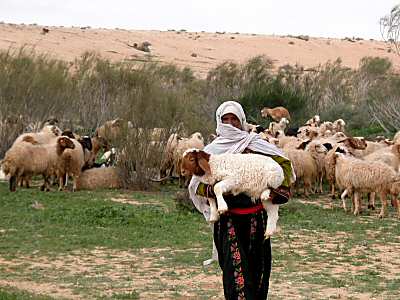
In ancient times the shepherding tradition
Allowed the intermingling of flocks
Until day’s end, when shepherds had the mission
To herd the sheep and goats as separate stocks.
The world is like those hills of Palestine,
With righteous and accursed from ev’ry nation.
We dwell as one, our lives to intertwine
Until the end time’s final separation.
And there before our Shepherd’s throne and feast
The nations learn the most surprising thing:
That service to the sick, the lost, the least,
In fact was service to this Shepherd King.
              Who's sheep?  Who's goat? Give me a heart that sees
               Your presence, Lord, among the least of these!

image: "The Last Judgment" 1917, Eric Gill

Tuesday, August 09, 2011

Sonnet: Matthew 15:10-28

"To eat with unwashed hands does not defile":
Such shocking teachings vexed the Pharisees
Whose laws, delineating pure from vile,
Had boiled faith down to following decrees.
For purity meant life in ancient days,
Pronounced one clean or foul, who's in or out.
Upending their religion, Jesus says
That sin corrupts within, not from without.
But soon his teaching moment gains a face
When Jesus, now in Gentile territory,
Receives request from someone deemed as base
Yet sees her faith as vessel for God's glory.
         Like her, I beg for crumbs of grace, dear Lord:
         To be proclaimed your child, to life restored.

Tuesday, August 02, 2011

Deuteronomy door jambs

One of the service projects on our recent youth group servant trip involved painting the entire interior of a church in a small community in South Carolina.  The congregation had hit hard times and was unable to pay to have their new worship and office space completed, and so they were depending on different volunteers working intermittently to get the job done. What our group found was the shell of a building that still has a long way to go.  The structure didn't even have any interior doors.  As we were putting paint on the walls, I noticed that one of the groups before us had left some "graffiti" in the door jambs by scrawling Scripture verses on bare wood.  Of course, eventually their graffiti will disappear once the doors are installed and the jambs are painted, too.  But, in the meantime, their message sustains the laborers.  I can only imagine that the graffiti artists used verses that they had already committed to memory and were not standing there with a Bible in their hand as they did it.

"I can do all things through Christ which strengtheneth me." Phillippians 4:13

Apparently the King James is the preferred version.

"There hath no temptation taken you but such as is common to man: but God is faithful, who will not suffer you to be tempted above that ye are able; but will with the temptation also make a way to escape, that ye may be able to bear it."  1 Corinthians 10:13

This would be the verse I'd memorize:

 "Jesus wept." John 11:35

A little less uplifting, perhaps, but still good to be reminded...

"For all have sinned and fallen short of the glory of God." Romans 3:23

A little Old Testament here...

"But they who wait upon the Lord shall renew their strength, they shall mount up with wings as eagles [sic], they shall run and not be weary, and they shall walk and not be faint.  Isaiah 40:31

This one had actually been left on the leg of a sawhorse.  Perhaps appropriately, for "on this hangs all the law and the prophets" (at least partly, according to Jesus):

"Love the Lord thy God with all thine heart and all thine soul, and all thine strength."  Deuteronomy 6:5

This little encounter occured to me to be one way of heeding the command in Deuteronomy 11: "You shall put these words of hime in your heart and soul, and you shall bind them as a sign on your hand...Write them on the doorposts of your house and on your gates, so that your days and the days of your children may be multiplied in the land that the LORD swore to your ancestors to give them, as long as the heavens are above the earth" (vv18-21).  I pray the congregation who inhabits this buildling also has better days ahead of it.

Wednesday, July 06, 2011

Sonnet: Matthew 13:1-9, 18-23


Few parables come with an explanation
As patent as the lesson of the sower
Whose planting style becomes a demonstration
Of how our God's a gracious kingdom-grower:
Upon a well-worn path some seed is tossed
While other kernels fall in rocky soil,
And though some seed among the thorns is lost,
Some finds its way to earth where farmers toil.
So, like that seed, God's word brings forth a yield
When it into our yearning hearts is cast.
However, Lord, I fear my heart's a field
More path and rocks and thorns where life can't last.
           Yet in some hidden acre love takes root.
           When you're the sower, e'en I can bring forth fruit!

Thursday, April 21, 2011

Sonnet: Mandatum Novum

The table’s set with symbols of salvation,
Which tasted, eaten, shared, would bring to mind
Those darker days they lived as oppressed nation,
A people with no hope, as slaves confined.
With grateful hearts, they share that recollection
And sing the hymn that echoes Miriam’s praise,
And in this meal, a chance for deep reflection:
Thus freed and loved, they serve God all their days.
But now they hear themselves called slaves once more
As gracious Teacher loves without reserve
And takes a towel, kneeling to the floor,
Cleans dirty feet, and shows them how to serve.
           Thus claimed by new commandment we are freed
           To lives that humbly stoop at neighbor’s need.


Monday, November 29, 2010

Advent and Thanksgiving


Thank you, O Lord, for this good life, and forgive us if we do not love it enough.”

                                                                                                    -Garrison Keillor

The juxtaposition of Thanksgiving weekend with the first Sunday of Advent has always struck me as a little odd, if not uncomfortable. On one day, we pause to think about the riches of life, the blessings of the past, the hope of enjoying of them in the future. On Thanksgiving, that is, I recall the events of the last year and dwell on the bounty of the present. In my better moments of giving thanks, I consider how those blessings and that bounty are not simply to be enjoyed in-and-of-themselves, but are opportunities to grow and serve into the future.

But then the first Sunday of Advent comes, with its apocalyptic themes and its promises of the return of Jesus. Advent, of course, is not only about preparation for Jesus’ birth. It is about any advent of our Lord…in the future as judge and King, in the present as the ones we serve, and in the past as the baby in the manger. The first Sunday of Advent stresses that first theme, and the Scriptures we hear shake us out of any preconceived notion of security and contentment. They remind us of “the threatening dangers of our sins,” and the need for the world to be set to rights. Advent reminds us that the way things are right now—even in this thankful moment—are not so great and not so perfect, and that God plans to reform and redeem them into something so much better. That is why hope is such a central theme to the season of Advent.

The problem is that, when I’m honest with myself, I realize that I’m often having such a good time with this life and its many gifts that I’d actually be quite disturbed and—dare I say, disappointed?—by a sudden return of Christ. The apocalyptic portions of Jesus’ teachings, to be sure, no doubt resonated with a certain constituent of his listeners, listeners who were underprivileged and feeling the weight of oppressive political and spiritual regimes, listeners who would have been emboldened and encouraged by this audacious advent hope and vision of a better future. And I guess I realize I do not necessarily fall into that category. I should, but I don’t always. I am comfortable. I am quite pleased with my life and how God’s blessings have fallen to me. I like this life, and one great fear I have is, like Garrison Keillor suggests, that I don’t love it enough.


How do I reconcile these two? I’m not sure I know. But I do know that in moments of blissful thanksgiving, we can be lured into thinking that this current life is as good as it gets. That doesn’t mean we shouldn’t love this good life, and we certainly shouldn’t take it for granted, but it also means that the Christian must remember that God’s new creation isn’t finished yet. There is more, and it will surprise us.

Tuesday, July 27, 2010

honest opinions

I came across this commentary as I was reading Anthony Trollope's Barchester Towers.  Although it was written in the 1850's, I suppose its point of view is just as valid today.  It's hard to stomach, but one that a preacher surely needs never to forget.  I wonder for how many the tedium from the preaching clergyman is the reason they feel "forced to stay away" from church.  Probably many.  I know I often grow weary of hearing myself in the pulpit.  What I also find interesting, on another level, is the professions to which the preaching clergyman are compared in this paragraph:

"There is, perhaps, no greater hardship at present inflicted on mankind in civilised and free countries, than the necessity of listening to sermons.  No one but a preaching clergyman has, in these realms, the power of compelling an audience to sit silent and be tormented.  No one but a preaching clergyman can revel in platitudes, truisms, and untruisms, and yet receive, as his undisputed privilege, the same respectful demeanor as though words of impassioned eloquence, or persuasive logic, fell from his lips.  Let a professor of law or physic find his place in a lecture-room, and their pour forth jejune words and useless empty phrases, and he will pour them forth to empty benches.  Let a barrister attempt to talk without talking well, and he will talk but seldom.  A judge's charge need be listened to per force by none but the jury, prisoner, and gaoler.  A member of Parliament can be coughed down or counted out.  Town-councillors can be tabooed.  But no one can rid himself of the preaching clergyman.  He is the bore of the age, the old man whom we Sinbads cannot shake off, the nightmare that disturbs our Sunday's rest, the incubus that overloads our religion and makes God's service distasteful.  We are not forced into church!  No: but we desire more than that.  We desire not to be forced to stay away.  We desire, nay we are resolute, to enjoy the comfort of public worship; but we desire also that we may do so without an amount of tedium which ordinary human nature cannot endure with patience; that we may be able to leave the house of God without that anxious longing for escape, which is the common consequence of common sermons."

Yikes.  And yet too true, I fear.

Tuesday, July 06, 2010

theology of summer gardening

We have more cucumbers than we know what to do with.  In a week, I suspect tomatoes will start giving us the same problem.  Really, I'm not complaining.  It's a good problem to have, and we only have it because I've spent so much time watering our garden in the midst of this drought.  Those who rely on their own agriculture to survive know how devastating a dry summer can be.  I will gladly eat cucumbers every day of the week.

Our first-ever vegetable garden has added an educational edge to this spring and summer.  I have not only watered and weeded fastidiously, but I have also wondered at the strenuous task of planting and cultivating crops.  I have nurtured a deeper admiration and appreciation for the farmers who live and die by this kind of toil, and I savor the produce I purchase in the supermarket--or in the roadside stand--all the more.  It is not only hard work (and I only have an 8 x 8 plot!), but it is an anxiety-producing one.  There is both so much for the cultivator to do...and also so much over which he has no control.  It is easy to curse nature.  But it also provides more opportunity to bless and thank God.  There are fewer things that set us apart more from the rest of God's creatures.  Humans cultivate.  They don't just chase food; they entice the soil to produce it.

As I was reading in an old text from seminary days, I came across this paragraph discussing part of what it means to say that humans are created in the "image of God":
In a variety of ways--through the cultivation of the earth, through craftsmanship, through the writing of books and the painting of ikons--man gives materal things a voice and renders the creation articulate in praise of God.  It is significant that the first task of the newly-created Adam was to give names to the animals (Gen. 2:19-20).  The giving of names is in itself a creative act: until we have found a name for some object or experience, an "inevitable word" to indicate its true character, we cannot begin to understand it and to make use of it.  It is likewise significant that, when at the Eucharist we offer back to God the firstfruits of the earth, we offer them not in their original form but reshaped by the hand of man: we bring to the altar not sheaves of wheat but loaves of bread, not grapes but wine.

So man is priest of the creation through his power to give thanks and to offer the creation back to God; and he is king of the creation through his power to mould and fashion, to connect and diversify...  (The Orthodox Way, Bishop Callistos Ware, St. Vladimir's Seminary Press, 1995. p 54)
Too many cucumbers is a good problem to have.  And apparently the very task of gardening is a privilege, too.  As I placed the seeds into the soil and added the fertilizer, as I staked the vines and clipped the ripe fruit, as I took the vegetables inside and transformed them into something unique and tasty, I borrowed from the experience of millions before me who sought to make creation sing in this remarkable way.  The Italians' word for worship is "il culto," from the Latin root for "to cultivate." It makes sense: in the liturgy we are cultivated to give God proper praise. But apparently the mere act of cultivating the soil and its fruits--fashioning and moulding what God has given--is a role of our worship, too.  It is our blessed human way of helping the earth praise its Creator. 

I must admit, though, that when I've been picking the cabbage loopers off my broccoli plants and throwing them over my shoulder to feed the bluebirds in my yard, I've not really thought of myself as a "priest of creation."  I tend to think of my priestly duties as confined to the altar where I pass out bread and wine and to the pulpit where I toss out words from Scripture.  Then again, five months ago my 8 x 8 plot was but a mere section of sod.  Now it gives birth to all kinds of good things which can be fashioned and moulded to eat and enjoy.  It has been a more holy task than I've given it credit for.

Saturday, June 12, 2010

A Letter to our Graduating Seniors

'Tis the season of the high school graduation, when we celebrate our seniors' scholastic achievements, reflect tearily on how quickly they've grown up, and then "send them off" into the wide world of adulthood.  For the church, marking this momentous event in the life of the American teenager has always been a challenge.  Some school districts hold a baccalaureate service to do so.  Other congregations simply list their graduates' names in the newsletter.  For many communities of faith, it is a difficult rite to address, because school and church seem to be separate domains.  But perhaps congregations need to re-think this.  In many cases, graduation marks the end of their participation in youth group and Sunday School.  Many of them will leave (if only temporarily) and, unless they settle down in the same town in which they grew up, graduation may also be the "end of the road" of their life in a particular congregation.  Should a congregation do more to draw attention to this reality as they send them on their way?  Should a congregation try harder to maintain the ties with its graduates?  It's a hard one...

Below is a copy of a letter I wrote to our graduating seniors, with the hope that it will at least start them thinking about their larger relationship to (with? in?) the church.  Yes, it's long.  And I also fear it's a little preachy.  But, for what it's worth, this is what they got:

Congratulations, seniors!

Both the congregation and I are extremely proud of you at your upcoming graduation. I have been fortunate to observe your growth in faith only over the past year and a half, but many of the members of our congregation have watched you grow up for a lot longer—from the moment you were baptized or joined this church, all through Sunday School, first communion, church youth group, and confirmation. I'll be honest with you: the congregation sees you as their children. Now you are about to take the “big step” into college or other walks of life, and we all pray the faith and character you have developed here will accompany you in the world beyond our doors. Many of you are no doubt more ready for this next step than we are; nevertheless, we are very happy and excited for you and look forward to seeing how God continues to work in your lives.

But we are also nervous. We are nervous not just because you will be venturing out from your parents’ protection into a world that is often dangerous, but also because statistics tell us that you will most likely stop going to church on a regular basis during the next four to eight years of your life. It seems like our society even hopes that you will wander around awhile, reorganizing your priorities, testing various things out, or like that beloved Robert Frost poem so often read at graduation ceremonies, “taking the path less traveled by.” Some of this must happen: life will always present us with decisions and opportunities which need good exploring, and the freedom you are about to experience will be exhilarating at times. But over the next few years you will most likely discover what I discovered at your age: that, for whatever reason, life after high school graduation will make it more difficult to wake up on Sunday mornings or carve out time during the week to attend worship somewhere. What we are really most nervous about, however, is that in all of the testing, wandering, and sleeping in, you will reorganize your priorities in such a way that you will determine that Church is not important in life.

And that, we know, is wrong. Church is important in life. In fact, if you look closely at all the ways this congregation has nurtured your character up to this point—partly through those things I named earlier—you will find that Church is vital and crucial and necessary. Church concerns not just your identity as a child of God, but your very salvation. By that I don’t mean that you must attend church to “get into heaven,” (we know from the Bible and our good Lutheran theology that there is nothing we have to do to get into heaven), but I mean that through the church and in the church is the only way that your relationship with God and God’s people may rightly be nourished—and that, in itself, is salvation. And despite some hurt feelings and the occasional hypocrisy you may have noticed in your fellow Christians along the way, it has primarily been through your family and the church that your gifts and your faith have been nurtured thus far in life.

Indeed, during these first eighteen years you have already been experiencing a foretaste of what the final form of our salvation will be like because you’ve been participating in Christ’s work. For example, you have been molded to serve others and learned how humbling it is to be served. You have made mistakes and been embraced with forgiveness. Likewise, you have begun to learn what it is like to embrace others in forgiveness. In some of the more exciting times you have discovered God has given you gifts through his Spirit, and that God has given you places to use them and people with which to share them. Already, through the church, you have started to taste, hear, feel, and see what God’s grace in Christ looks like. In the church you have been loved and encouraged in a way that the world will never be able to care and encourage you. And as you continue, you will find that the people gathered in the church—we call them saints—are necessary for helping you understand and articulate how God is at work in your life. These are the elements of salvation, and it one reason why the church is and will continue to be important in your life.

There is another big reason why we become anxious that you may wander away too long from this imperfect but nevertheless gracious community: we don’t want you to forget the stories.  I'm speaking mainly of the stories in our Scriptures—like how God gave Israel manna to eat in the desert on their way to the Promised Land, or how God saved Noah and the animals with the ark. Or the one about Jesus’ feeing the five thousand, and the one about the silly shepherd who throws a party after he finds his one lost sheep. Those stories are powerful and fun, and being with us on a regular basis will help you remember them.  But even more importantly, the church helps all of us remember that, through Jesus, God narrates true meaning for the entire world and redeems it from sin. The world, by contrast, will offer its share of competing stories for the meaning of life, some of which may be worth listening to for awhile, but no story the world thinks up will contain the words that begin, “In the night in which he was betrayed…” There is unfathomable love in that story, love that puts an end to sin and death, love that grants eternal life, and it absolutely captivates us. Beginning with your baptism, you have been irrevocably woven into that world-redeeming story, and this congregation has done a fairly good job of telling it to you, over and over, so that you may begin to see yourselves in it. It may sound strange, but the church is of utmost importance to you and the world because of this particular story and the way God’s people tell it by living it out.

Speaking of that, the church also sorely needs you and your gifts. You will be the next generation of people through whom the Spirit will help form us all into the person of Christ. Oops. Strike that. You already are the next generation who will mold others in the faith. I hope you will discover how much you will depend on the church for this mighty task.

So, as you enter this phase of your life—be it wilderness or paradise—know that God has promised to be with you. As you leave to “grow up” or “become independent,” don’t forget the value of growth in God’s Spirit or lose sight of the ways in which you have learned that we are all inter-dependent. Remember that God has been stating your true identity since your baptism, and that the community called the church has and will be intimately involved in that process. Think of it like this: at your birth, you were set in motion toward God. Sin tries to prevent us from moving toward that goal, but Christ, through the church, places us back on track every time. This grace saves us, and the church tells this story, lest we forget it. Here you will get manna for that great journey. Here in this ark, God guides us to salvation.

This is why the church is important.


May God bless you in your life. We love you.

Phillip Martin


P.S. Don’t be a stranger!


Monday, May 24, 2010

Gran Torino (2008) - Bible study guide

At our young adult meeting of "Luther on Tap" this evening we looked at the 2008 Clint Eastwood flick Gran Torino with "eyes of faith."  The discussion was good, and our little group came up with some good insights as to how the film conveys some Christian themes.  Here is a copy of the questions I used as a discussion guide:

How are family relationships portrayed in the film?  How do Walt Kowalski's interactions with his Hmong neighbors compare to his interactions with his own family?  What are relationships like within the Hmong community?

"While Jesus was still speaking to the crowds, his mother and his brothers were standing outside, wanting to speak to him.  Someone told him, 'Look, your mother and brothers are standing outside, wanting to speak to you.'  But to the one who had told him this, Jesus replied, ''Who is my mother, and who are my brothers?' And pointing to his disciples, he said, 'Here are my mother and brothers!  For whoever does the will of my Father in heaven is my brother and sister and mother.'" (Matthew 12:46-50)

Jesus redefines the concept family in the New Testament by stating that genetic and familial bonds are secondary to bonds forged through participation in the life of faith ("Water is thicker than blood").  Do Walt and members of the Hmong community function more like family than their blood relatives?

The film portrays a neighborhood that is in transition.  What does it look like?  What kinds of forces influence life in this neighborhood?  Can people control them?  How might the situation in the neighborhood be an allegory for sin?

How does the relationship between the priest (Father Janovich) and Walt evolve throughout the film?  Do you think Father Janovich has an influence in Walt's life?

Gran Torino has been described as a Good Friday film.  In what ways might this description fit?  What images from the end of the movie stick out to you?

In what ways might Walt serve as a Christ-figure in the film?  In what ways does he fall short?

Explain the significance (if any) of the following: the war medals, the Gran Torino, the condition of Walt's house.

"[Walt] has saved the boy, not by using more violence, but by abolishing that small circle of violence"  [http://www.episcopalcafe.com/daily/church_year/gran_torino_and_good_friday.php]
  In what ways has Walt "saved" the boy?  Is that word appropriately used in this instance?  How so?


Phillip Martin

Wednesday, April 28, 2010

Sonnet: John 10:22-30

I like it when the phrases can't always be contained within 10 syllables and need to be wrapped into the following line, but it is often difficult to get that to happen.

A plain confession’s what the skeptics seek;
At Temple portico they press their point.
For now, the teacher says, his works will speak
His claim to be the One God did anoint.
But their suspense is more than they can bear.
They want a gesture, words they can perceive.
The blind are healed, the crowds are fed with care;
But signs are lost on those who won’t believe.
Yet those who see with inner eye are not
So blind and, lamb-like, answer to his call.
Though life be hard and with grave danger fraught,
They know their shepherd bears them through it all.
           So call, Good Shepherd, call with voice so clear
           And give this skeptic sheep the grace to hear.

Wednesday, February 24, 2010

Sonnet: Luke 4:1-13

I'm not particularly proud of this one, but at some point I just need to be finished and move on.

'Twas almost at the start the Tempter gained
That guile to be the voice that man preferred.
And even ancient Israel was stained,
Persuaded they could live without God’s word.
Enamored with the wealth of other lands,
They traded humble deeds for spear and sword.
Through time we’ve fallen captive to his hands:
He’s taught us all to test our gracious Lord.
But one day in Judean desert space
The Tempter comes to glimpse his final hour.
A new Man, Spirit-led and full of grace
Rejects his deals for bread and wealth and pow’r.
           And thus the Tempter’s guile began to wane,
           His power broken. Now Christ, our Lord, will reign.


image: "Temptation on the Mount," Duccio di Buonisegna, 1308-1311

Tuesday, February 16, 2010

Christ as fish

I picked up my copy of Annie Dillard's Pilgrim at Tinker Creek the other day and happened upon this passage right after I finished the sonnet for Luke 5:1-11.  Tinker Creek is a book that takes a couple readings to appreciate its use of allusion.  Although I've heard these verses dozens of times over the course of my life, I've never heard some of the kerygmatic connections she makes.  I like them.  Normally I think of fishing as a grueling, backbreaking profession, but she sees it in a slightly different light:

I am coming around to fish as spirit.  The Greek acronym for some of the names of Christ yields ichthys.  Christ as fish, and fish as Christ.  The more I glimpse the fish in Tinker Creek, the more satisfying the coincidence becomes, the richer the symbol, not only for Christ but for the spirit as well.  The people must live.  Imagine for a Mediterranean people how much easier it is to haul up free, fed fish in nets than to pasture hungry herds on those bony hills and feed them through the winter.  To say that holiness is a fish is a statement of the abundance of grace; it is the equivalent of affirming in a purely materialistic culture that money does indeed grow on trees.  "Not as the world gives do I give to you"; these fish are spirit food.  And revelation is a study in stalking.  "Cast the net on the right side of the ship, and ye shall find."

There's a thought as we begin the journey of Lent: "The people must live."

Monday, February 08, 2010

Sonnet: Luke 5:1-11

These are stretching the limits of my grasp of the English language!  This one for Epiphany 5C is still a work in progress...

Their night out on the lake, no doubt, was long,
Pursuing fish wherever fish may lurk.
Though instinct of a fisher's seldom wrong,
Gennes'ret yielded nothing to their work.
And now at sunrise, work must shift to shore
With nets and boats to clean and dry and mend.
As callings go, to fish can seem a chore:
The toil of catching, cleaning has no end.
A rabbi steps into their boats to teach
To cast their netting once more overboard.
The draught of fish they haul onto the beach
Transforms their lives.  They come to call him "Lord."
          Despite our doubt and dread, Lord, call us, too.
          With gracious instinct, give us tasks for you.


"The Miraculous Draught of Fishes," Peter Paul Rubens (1618-1619)

Tuesday, February 02, 2010

Sonnet: Luke 4:21-30

I don't know how long I'll be able to keep at this strange goal to compose a sonnet for each lectionary Sunday.  They are surprisingly difficult to put together.  The last couplet on this one took a good hour and a half.  But, for whatever it's worth, here's another.

(Originally I had hoped to complete this one before last Sunday, in order to keep it current.  A weekend youth retreat, however, distracted my energy.  But because a snowstorm cancelled church last Sunday, we will be using these readings this coming week.)

The hometown crowd should not be hard to win:
With clear authority he speaks God's word,
They recognize his face, his next of kin,
And zeal like his they've never before heard.
Yet words are not enough for Nazareth.
Their jealous hearts desire his deeds of pow'r.
But like the grace displayed at Zarephath
When famine reigned in Judah's darkest hour;
Or like the mercy Naaman received
When Jordan's waters cured his dread disease,
God's kingdom prospers when it is believed,
And Christ will heal and rule where Christ may please.
        Though sinful rage demands this Prophet's fall,
        His cross-borne deed will prove he loves us all.


photo: modern-day Nazareth